News
Practice, Not Theory. Workshops at the 7th Congress of Accounting Firms
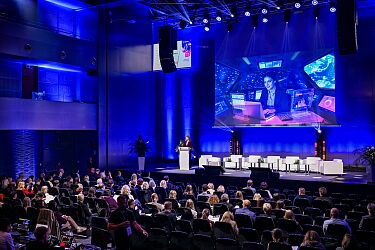
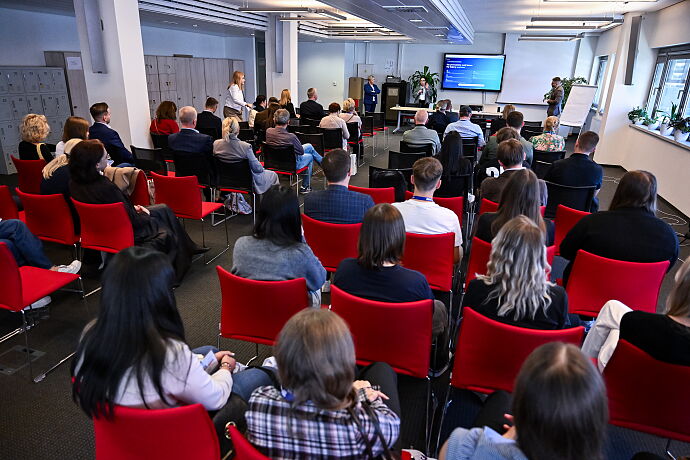
On the first day of MKBR, participants could choose from ten workshops taking place simultaneously in several rooms at the Congress Centre. The topics covered a wide range of issues, but all the sessions had one common goal – to demonstrate solutions that can be put to use in the everyday work of an accounting firm.
AI and Automation in Practice
Technologies that are increasingly transforming the work of accountants were given plenty of attention. During the workshop “Accounting Science Fiction in Practice”, participants explored the possibilities of integrating e-invoices, client collaboration and their own team's work within a single system. A separate session focused on automation and the use of AI in HR and payroll, including ways of reducing the amount of work involved in the Płatnik system.
The challenges associated with implementing new technologies were also discussed. During a workshop devoted to the most common errors in accounting systems, participants analysed situations in which solutions designed to make work more efficient can, in practice, start costing an accounting firm both time and money.
Technology also featured in the context of business growth. Participants discussed scaling operations and the possibility of using ready-made technological, tax, legal and audit infrastructure rather than building all these capabilities in-house.
How Much Time Do We Really Lose on Invoices?
The afternoon workshop sessions focused even more closely on everyday processes. One session explored ways of reducing manual bookkeeping to virtually zero, while another demonstrated where dozens of hours of work can disappear every month in the handling of invoices.
Experts pointed out that simply implementing KSeF does not solve every problem. The system can automate the retrieval of invoices, but tasks still remain, such as determining what a purchase related to, classifying it correctly, describing the document and selecting the appropriate ledger account. With a large number of clients, the cumulative effect of these seemingly minor tasks can amount to as much as several dozen hours of work each month.
What Should We Give to AI, and What Should Remain with People?
Another theme on the first day was the boundary between automation and human work. During the “AI Under the Accountant's Control” workshop, participants examined three areas worth automating and three that should remain under the accountant's control. The aim was to develop a practical model for using artificial intelligence in an accounting firm, rather than automating processes simply because technology makes it possible.
The workshops also showed that the future of accounting firms is not just about technology. Communication remains equally important. During the session entitled “Houston, We Have a Problem!”, participants tackled difficult conversations with clients – situations involving tension, pressure, mistakes or dissatisfaction. They discussed how to respond professionally when a client applies pressure, assigns blame or expects a solution that the accounting firm is unable to provide.
Day Two of MKBR – More Workshops Ahead
The practical side of the 7th Congress of Accounting Firms does not end here. On Wednesday, 30 September, participants can look forward to another series of workshops, with the first session beginning at 9.30 a.m.
Experts will demonstrate, among other things, how to move from tax compliance to management analytics and use AI to develop new services for an accounting firm. There will also be discussions on how to handle a larger number of clients without expanding the team, and how automation can help recover the time lost each month to processing documents and invoices.
A workshop on scaling a business also promises to be particularly interesting. Arek Lewandowski will explain how his accounting firm grew elevenfold in three years, what mistakes were made during such rapid expansion and what “Accounting Firm 2.0” should mean in practice.


Later in the day, participants will be able to choose from further practical sessions focused on the development and organisation of accounting firms. The programme includes, among other topics, experience of building a business from scratch to 350 clients and subsequently selling it, the use of AI and KSeF, as well as issues surrounding management and the future of client service.
Recommended articles