News
Accounting Without Secrets! New Services, KSeF and the Future of Accounting Firms Discussed at the First MKBR Panel
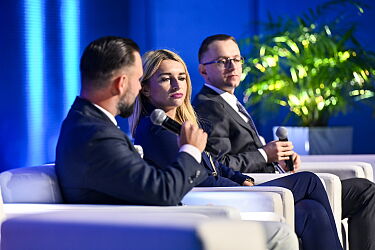
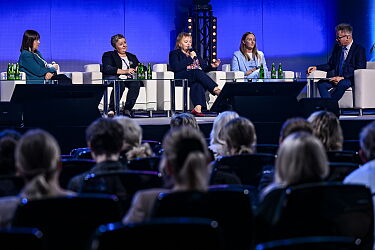
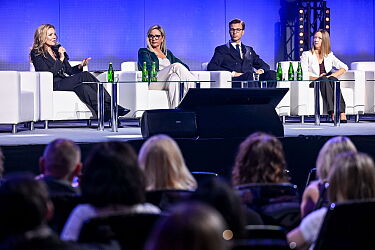
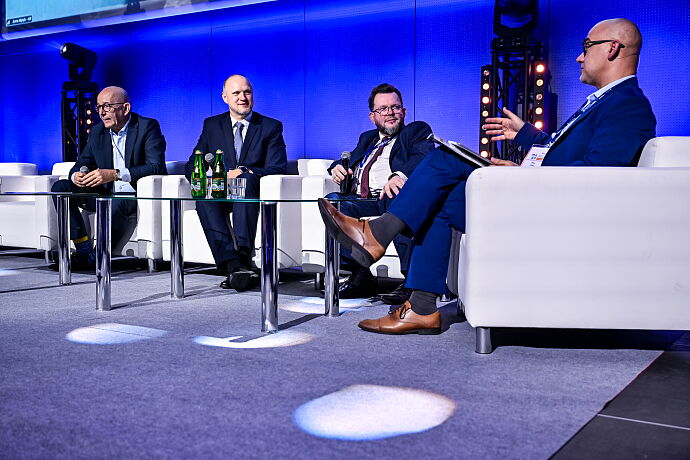
The first MKBR panel featured Dr hab. Stanisław Hońko, Prof. at the University of Szczecin and President of the Main Board of the Accountants Association in Poland; Michał Cielibała, tax adviser, President of the Management Board of BIUREX Accounting Office and President of the Accountancy Firms Club of the Accountants Association in Poland in Kielce; Anna Mytyk, Deputy Director of the Department of Goods and Services Tax at the Ministry of Finance; and Roman Łożyński, Director of the IT Centre of the Ministry of Finance.
One of the topics discussed was the growing role of accounting firms as business partners. Michał Cielibała pointed out that there is considerable scope for expanding the range of services they provide. Drawing on their expertise and cooperation with, among others, lawyers and IT companies, accounting firms can offer clients additional support – from financial services and intermediation, through e-Delivery and KSeF implementation, to training.
At the same time, he stressed that additional tasks should not automatically become part of the core accounting service. There is still no consistent standard defining exactly what this term covers. As a result, clients find it difficult to compare offers, while price differences between services can be substantial. – Our role is to convince the client that our service is not too expensive, but that it includes elements that are not part of another service – stressed Michał Cielibała. As he explained, a clear standard would allow clients to know exactly what they are paying for, while giving accounting firms a clear framework for defining which activities fall within the basic scope of service and which should be charged separately.
KSeF Will Evolve. The Ministry Responds to User Feedback
The National e-Invoicing System, KSeF, featured prominently in the panel discussion. Anna Mytyk from the Ministry of Finance stressed that the solutions being prepared are the result of dialogue and consultations with system users. Some of the changes will require legislative amendments, while others will be technical and functional in nature. One important announcement is the retention of token-based authentication. The existing arrangements provided for tokens to be available only for a limited period, but, as Anna Mytyk explained, the Ministry of Finance has decided to retain them, which will require the relevant legislation to be amended.
Roman Łożyński presented the technical details. Among other things, he announced new types of certificates that will make it possible to identify more precisely the entity to which specific permissions relate. These changes will be particularly relevant to entrepreneurs running several businesses, companies with subsidiaries and organisations with complex local-government structures. In response to requests from accounting firms, the period covered by a downloaded data package is also set to increase from 90 to 100 days. The taxpayer application will also continue to be developed, while the maximum invoice size is to increase from 1 MB to 5 MB, and that of a corrective invoice to 10 MB.


More Automation and Easier Communication with Clients
Further solutions are intended to make accountants’ day-to-day work more efficient. Roman Łożyński announced the development of functionality enabling invoices and individual invoice items to be classified. This is expected to create greater scope for automating accounting processes. In the first quarter of next year, work will also continue on a mechanism for recording document-related events, including marking when an invoice has been received by the system. Another important change will be the ability for clients to add a description to an entire invoice or to a specific item. This will allow the information an accountant needs to classify a document correctly to be provided directly alongside the document itself.
As Roman Łożyński noted, the technological scale of the system is enormous – KSeF processes around 12 million invoices a day, while its database already contains approximately 800 million documents. The first MKBR panel highlighted both the scale of the technological changes taking place in accounting and the growing importance of communication between accounting firms and their clients. Dr hab. Stanisław Hońko, Prof. at the University of Szczecin, also drew attention to the particular nature of accountants’ work, in which periods of especially heavy workloads are simply part of everyday life in the profession.
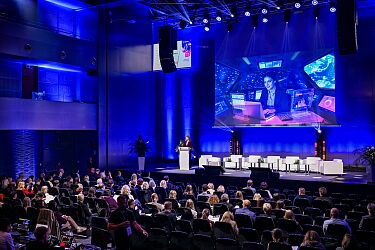
The first panel set the scene for the further discussions and sessions of the MKBR Congress of Accounting Firms at Expo Kielce.
(ŁK)
Recommended articles