News
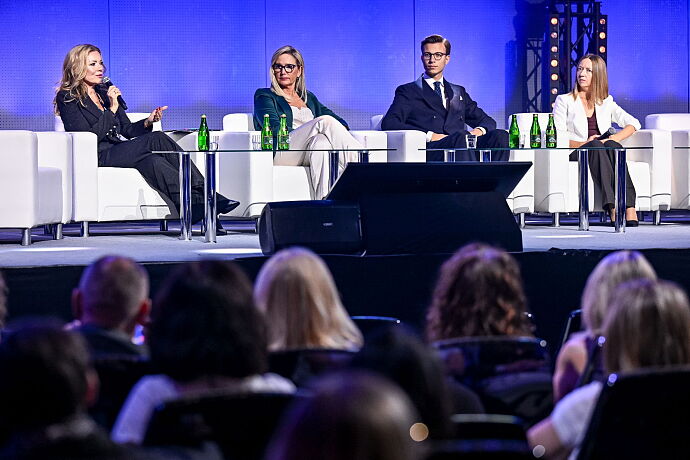
A young accountant wants more than just bookkeeping. What does the new generation expect from an accounting firm?
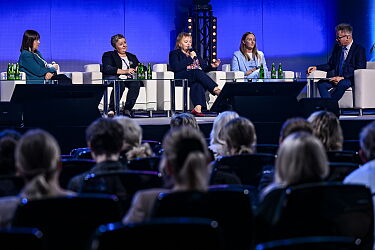
The panel featured Monika Olszewska, President of MRM Consulting, Mikołaj Florczak, an educator with the Genboost project run by the OFF School Foundation, Beata Kostrzycka, Development Director and Management Board Member at wFirma, and Agnieszka Kowalska, President of the Association of Cooperating Accounting Firms.
“What will I learn here?”
Mikołaj Florczak noted that, for young people, acquiring new skills is one of the most important aspects of working life. Simply hiring a talented person is not enough: they need to be properly onboarded, given responsibility gradually and shown how they can develop professionally.
Young people are more open than previous generations about their expectations. Nor do they assume that recognition will come simply from spending long hours at their desks. As Agnieszka Kowalska pointed out, work is an important part of their lives, but it is not the whole of it. For firm owners, this is a signal that they need to talk to employees about their responsibilities, development opportunities and flexible working arrangements.
Florczak also warned against overloading young employees. Responsibility can foster engagement when it is accompanied by support. Without that support, an employee can quickly lose motivation, even if they remain with the company.
Independence starts with the owner
– If we raise our expectations of employees, we first need to raise our expectations of firm owners – said Agnieszka Kowalska. She admitted that for years she had preferred to complete a task herself in minutes rather than spend more time teaching an employee how to do it. The result was predictable: whenever she was away, the team still needed her to make decisions on many matters.
In her view, a young employee should know from the outset where the boundaries of their responsibility lie. They need to understand what they can decide for themselves and when they should ask for help. It is equally important to create an environment where they feel safe enough to report a mistake as soon as they spot it. That is how independence can be built without leaving an employee to deal with problems on their own.
Kowalska suggested treating employees as people who help shape the firm: explaining how the business operates, where service prices come from and why understanding the client’s business matters. This enables an accountant to spot when a client may need additional support, or to recognise that the firm is already carrying out work beyond the agreed scope of services.
The senior accountant teaches tax, the junior one brings new tools
Reverse mentoring could be one way of bringing generations together. An experienced accountant helps a newcomer understand regulations, procedures and the realities of dealing with clients. The younger employee, in turn, shares their confidence in using digital tools. As Agnieszka Kowalska pointed out, both sides have knowledge that can benefit the other.
Mikołaj Florczak stressed that mentoring should mean genuine support for professional development. A young person needs someone they can discuss difficulties with and receive feedback from. In his view, this kind of relationship can be one of the reasons why a valuable employee chooses to stay with a firm for longer.
From numbers to conversations with business owners
A new generation of accountants is entering a profession that is changing rapidly. Technical knowledge remains essential, but communication skills are becoming increasingly important. Monika Olszewska pointed out that business owners often know their own operations inside out, but may need help understanding what their financial data actually means. An accountant should be able to explain this information clearly and ask the right questions.
Not every employee needs to perform exactly the same role. Some are best suited to analysis and work requiring a high degree of accuracy, while others are naturally good at building relationships with clients. In Olszewska’s view, a good firm owner can recognise these strengths and organise the team accordingly. Florczak added that communication skills can be developed, including among people who do not initially feel confident speaking to clients at the beginning of their careers.
Will automation take jobs away from young accountants?
Beata Kostrzycka spoke about a concern that can arise when new systems are introduced: if software takes over some repetitive tasks, what will be left for employees to do? The answer also depends on the firm owner. They should explain the purpose of the change to the team and show how the time saved can be put to better use.
Automation can give an accounting firm more room for training, better organisation and more attentive client service. Implementing it, however, requires trust and a willingness among employees to learn new ways of working.
The question of the new generation is also a question about how an accounting firm is run. Young professionals can bring technological know-how, a fresh perspective and a desire to develop. For these strengths to translate into better services, they need the knowledge of experienced accountants, clear rules and an owner who gives them the opportunity to take on responsibility gradually.
Recommended articles