News
Poland and Korea Strengthen Defence Cooperation. From Arms Procurement to Joint Production and Exports
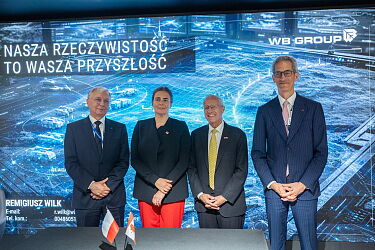
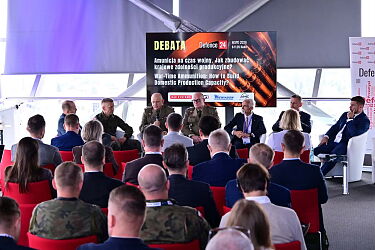
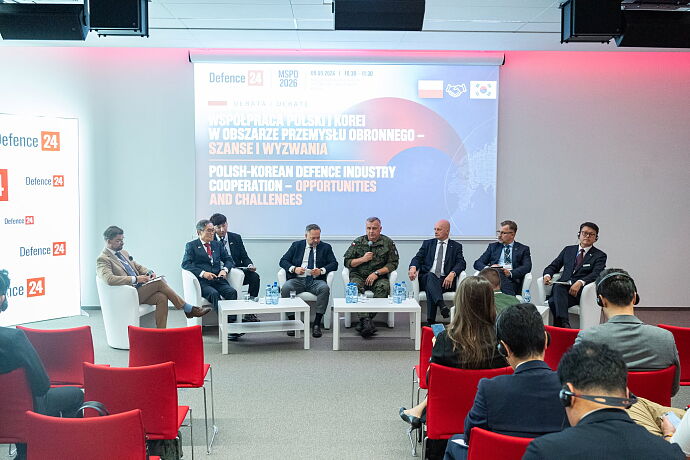
The panellists included Lee Yong Cheol, Minister responsible for the Defense Acquisition Program Administration of the Republic of Korea (DAPA); Konrad Gołota, Undersecretary of State at the Ministry of State Assets; Brigadier General Piotr Paluch, Deputy Head of the Armament Agency; Marcin Kubica, Managing Director of WB GROUP; Rafał Harmoza, Director of the International Cooperation Department at Polska Grupa Zbrojeniowa; and Cho Honggi, Executive Vice President of Hyundai Rotem Europe.
Local Content and Technology Transfer as Priorities
Konrad Gołota stressed that following the first stage of cooperation, whose primary objective was to rapidly replenish the capabilities of the Polish Armed Forces after equipment had been transferred to Ukraine, the time has come for significantly deeper industrial engagement.
“If you want to be in Poland and sell in Poland, you have to invest in Poland and cooperate with Polish industry. The direction should be towards greater partnership, significantly greater localisation of production, stronger technology transfer and jointly entering third markets,” said Konrad Gołota.
The Undersecretary of State also highlighted the importance of building domestic capabilities to service and maintain the equipment being procured. This has both an economic dimension – creating jobs and keeping part of defence spending in Poland – and a strategic one, linked to the country’s logistical security.
Korea: Joint Development, Production and Exports
Lee Yong Cheol noted that the cooperation between Poland and the Republic of Korea, now in its fifth year, has reached a point where its next stage needs to be defined. He pointed to the development of platforms tailored to Polish requirements, such as the K2PL and FA-50PL, as examples.
“This is no longer simply about supplying Korea-made defence equipment to Poland. We are developing solutions that meet Poland’s needs, pursuing joint production and localisation. I would like our industrial cooperation to become so advanced that, in times of crisis, Poland and Korea can be strategic partners for one another, including in terms of supply chains,” stressed Lee Yong Cheol.
The DAPA representative also spoke about opportunities for joint research and development in emerging battlefield technologies, including low-cost unmanned systems, counter-drone systems and laser weapons.
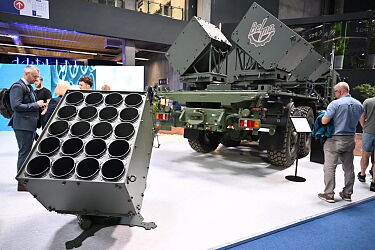
He also pointed to specific projects. Hanwha Aerospace and WB GROUP have established a joint venture whose facility in Gorzów Wielkopolski is to manufacture missiles for the Chunmoo system. Production of K2PL tanks in Poland is also being developed.
Armament Agency: The Second Stage Means Localisation and MRO
Brigadier General Piotr Paluch recalled that the initial contracts signed in 2022 were primarily intended to rapidly fill capability gaps in the Polish Armed Forces. The current stage is designed to involve Polish industry much more extensively.
“We want to create favourable conditions for Polish contractors to become part of the component supply chain, as well as the entire MRO – maintenance, repair and overhaul – area. We are also planning an extensive localisation process and the greatest possible involvement of Polish technological solutions,” said Brigadier General Piotr Paluch.
The Deputy Head of the Armament Agency also referred to ongoing contracts. The first agreement for 180 K2 tanks has been fulfilled, while implementation of the next order, which also includes the target K2PL variant, is under way. Deliveries of K9 self-propelled howitzers are accompanied by the transfer of expertise, including to Huta Stalowa Wola, while the Homar-K programme is developing missile production capabilities in Poland.
In the case of the FA-50, the first 12 aircraft have already been delivered and are being used for intensive training. The schedule for subsequent deliveries has been adjusted, among other things, to the contractor’s production capacity.
Hyundai Rotem: Tank Production to Return to Poland
Cho Honggi of Hyundai Rotem Europe stressed that the second executive contract for the K2 represents a breakthrough in terms of technology transfer and the development of Poland’s domestic production capabilities.
“We want a long-term, strategic and lasting partnership between Korea and Poland. Trust must be its foundation. I believe that this trust has already been built, so now we need to pick up the pace together and move forward,” said Cho Honggi.
Hyundai Rotem is preparing to transfer technology to selected Polish companies. MRO capabilities are also being developed, alongside preparations for the assembly and production of K2PL tanks at the Bumar-Łabędy facility.
“I would like tank production to be re-established in Poland after decades. Poland and Korea can also jointly take this offering to the European market,” said the Hyundai Rotem representative.
Gorzów Wielkopolski to Become a European Missile Hub
Marcin Kubica of WB GROUP spoke about the cooperation with Hanwha Aerospace, which has been developing for several years. Its next stage is the establishment of a joint venture and construction of a facility in Poland to manufacture missiles for the Chunmoo system.
“We are already at the symbolic ‘breaking ground’ stage. We are starting the investment, with the official ceremony planned for November. Most importantly, the facility in Gorzów Wielkopolski is intended to become a European hub – missiles manufactured in Poland will also be able to be supplied to other European users of the Chunmoo system,” said Marcin Kubica.
He stressed that the project is not a one-off venture arising from a single contract, but the beginning of a strategic, long-term partnership.
WB GROUP is also expanding its presence in the Korean market. Polish unmanned systems have already been delivered to the Republic of Korea’s Armed Forces, with user training completed and service facilities established.
“We really can do more, and we can do it faster. We have a strategic partnership with Korean industry and want to use it as a basis for further developing our presence in Korea,” stressed the WB GROUP representative.
PGZ: Greater Flexibility Is Needed
Rafał Harmoza of Polska Grupa Zbrojeniowa noted that as cooperation moves from framework agreements to detailed arrangements concerning technology transfer and production, natural differences in negotiations emerge. In his view, these should be resolved at business level while maintaining a shared strategic objective.
“There will always be something to improve. We need greater flexibility in our approach to technology transfer and the localisation of production in Poland. Both PGZ and our Korean partners must be ready to respond to the non-standard needs of our main customer, the Polish Armed Forces,” said Rafał Harmoza.
The PGZ representative also announced that Wojskowe Zakłady Lotnicze No. 2 in Bydgoszcz had successfully passed a KAI audit assessing its readiness to provide maintenance services for FA-50 aircraft.
From Procurement Contracts to Strategic Partnership
The panellists agreed that the next stage of relations between Poland and Korea should be a move away from a model based primarily on arms procurement towards a fully fledged industrial partnership. This should encompass local production, maintenance and modernisation of equipment, technology transfer, joint research and development, and exports to European and global markets.
As Konrad Gołota noted, the success of the cooperation should no longer be measured solely by the number of contracts signed.
“When we meet for the next discussion, I would like us to be able to say what we have managed to do better since this meeting. That will be the true measure of our progress and of taking the partnership to the next level,” concluded the Undersecretary of State.
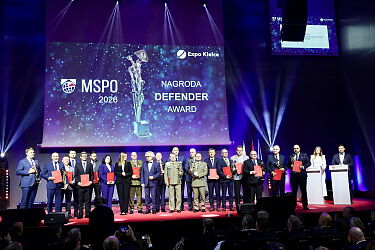
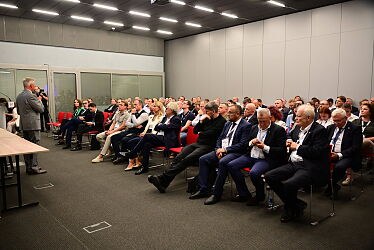
The debate at MSPO 2026 – the International Defence Industry Exhibition at Targi Kielce demonstrated that Polish-Korean cooperation is entering a new phase – moving from the rapid procurement of defence equipment towards building lasting industrial, technological and production capabilities on both sides.
![korea-2.jpg [314.00 KB]](https://www.targikielce.pl/storage/image/core_files/2026/9/9/cc39e0f3ee0ca18a808b2fb117830c40/default/preview/korea-2.jpg)
Recommended articles