News
From Years of Research to Weeks of Deployment. War Is Transforming Defence Technology Development
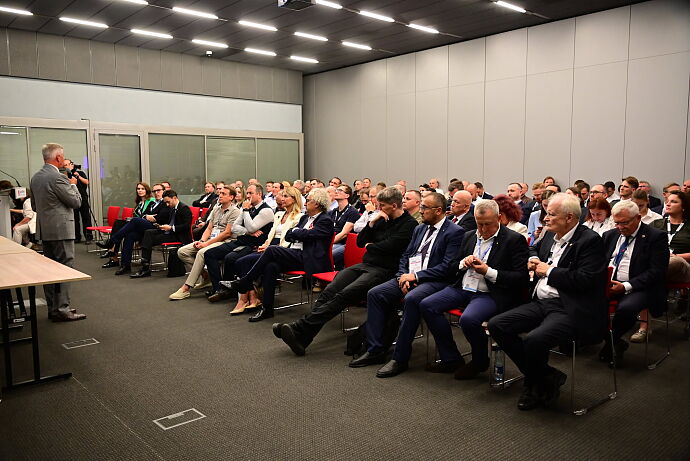
“Unmanned Combat Systems – Experience and the Future” was the theme of the 7th Ukrainian-Polish Forum for Defence Industry Cooperation. Representatives of government, the armed forces, industry and business organisations from both countries examined, above all, the experience of the ongoing war and the changes it is bringing to the modern battlefield.
Stanisław Wziątek, Undersecretary of State at the Ministry of National Defence, noted that the conflict, which initially had many features of a conventional war involving large numbers of ground and armoured forces, has changed dramatically over the years. Air operations, drones, as well as air defence, missile defence and counter-drone capabilities are becoming increasingly important. Poland’s capabilities in these areas should also be developed by drawing on the experience of the Ukrainian Armed Forces, which can test new solutions directly in combat conditions.
Technology Cannot Wait for Years
The pace of change was one of the recurring themes of the forum. Ukrainian participants pointed out that solutions which until recently took years to develop can, under wartime conditions, undergo successive modifications within just 3–4 weeks. The decisive factor is therefore not technology alone, but also the speed at which it can be tested, deployed and adapted to new threats.
Andrzej Burgs, President of Sygnis S.A., stressed that this also requires a change in approach on the part of the defence industry. Lengthy research, certification procedures and the drive to eliminate every possible risk can mean that a required solution reaches the end user too late. Rather than waiting years for full certification, equipment needs to be deployed, tested and improved more rapidly through successive iterations.
“Equipment either works or it doesn’t. You have to take the risk and verify it. If it works, great. If it doesn’t, we iterate once again,” said Andrzej Burgs.
The discussion covered more than drones alone. Technologies identified as changing the way military operations are conducted included counter-drone systems, artificial intelligence, robotics, cybersecurity, communications, sensors and dual-use solutions. The experience of Ukraine also shows that there is no single universal way of protecting against unmanned systems. What is needed are systems combining detection, warning, jamming, infrastructure protection and a continuous ability to adapt.
From Frontline Experience to Production
Areas identified for joint action between Poland and Ukraine included research and development, manufacturing, components, unmanned and counter-drone technologies, as well as dual-use solutions. Ukraine brings experience in rapidly testing technologies in wartime conditions, while Poland offers industrial and manufacturing capacity and access to European funding mechanisms.
Łukasz Czajkowski, Director General of the Polish Dual Use Chamber of Commerce, highlighted the importance of moving from declarations to concrete orders.
“Without government procurement, there can be no development of capabilities. Polish companies need orders. They then need to manufacture and test equipment as part of those orders, to break those drones and build better generations. This cannot be achieved through grants and letters of intent,” he stressed.
The forum was attended by, among others, Serhii Bojev, Deputy Minister of Defence of Ukraine; Stanisław Wziątek, Undersecretary of State at the Ministry of National Defence; Andrii Deszczyca, former Ambassador of Ukraine to Poland; Jacek Piechota, President of the Polish-Ukrainian Chamber of Commerce; Denys Sviatokum, Chairman of the Ukrainian Dual-Use Technology Cluster; as well as representatives of Polish and Ukrainian defence companies and military experts.
The 7th Ukrainian-Polish Forum for Defence Industry Cooperation was organised by the Polish-Ukrainian Chamber of Commerce, the Polish Dual Use Chamber of Commerce and the Ukrainian Dual-Use Technology Cluster.


BB
Recommended articles