News
Clean Air Programme examined in detail. WFOŚiGW expert discusses window replacement and funding at WinDoGlass
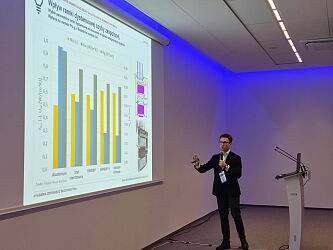
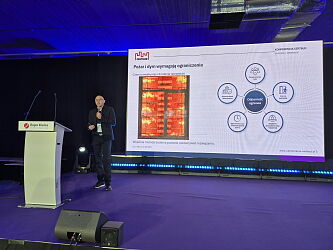
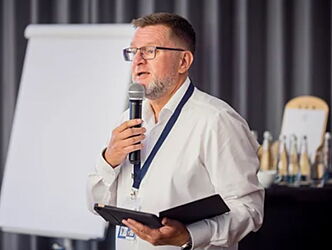
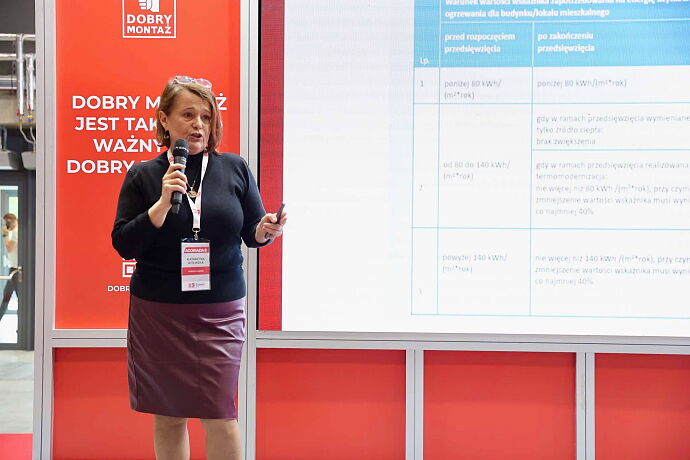
During her presentation on the AGORIADA stage organised by the Polish Association of Windows and Doors, Katarzyna Kitlińska recalled that the “Clean Air” Programme has been running since 2018. Its aim is to improve air quality and reduce greenhouse gas emissions by replacing heat sources and improving the energy efficiency of single-family residential buildings. The programme is being implemented on a very large scale, with a target of 2.5 million residential buildings or premises in which inefficient heat sources will be replaced or energy efficiency improved.
The programme is scheduled to run until 2032, with agreements with beneficiaries to be concluded by the end of 2030 and funding available for expenditure until the end of 2032. Applications are accepted on a continuous basis.
Who can apply for funding?
The programme is aimed at owners of existing single-family residential buildings. As the speaker pointed out, the amount of support available is directly linked to the beneficiary’s income.
“The lower the income, the higher the grant. We have three basic levels of funding: basic, increased and maximum. At the basic level, annual income must be below PLN 135,000. If the average monthly income per person is below PLN 2,250 in a multi-person household or PLN 3,150 in a single-person household, applicants may qualify for the increased level,” Katarzyna Kitlińska explained.
At the maximum level of support, the thresholds are PLN 1,300 per person in a multi-person household and PLN 1,800 in a single-person household. In this case, however, meeting the income criterion alone is not sufficient; the building’s energy performance standard is also relevant.
The speaker also recalled the rules concerning the period of property ownership. As a general rule, the applicant must have owned the building for at least three years, although exceptions apply, including in cases involving inheritance, adverse possession and certain forms of acquiring property.
Up to 100 per cent of eligible costs
The basic level of funding covers 40 per cent of eligible costs, the increased level – 70 per cent, while the maximum level may cover up to 100 per cent of eligible costs. These are net costs, meaning that VAT remains payable by the beneficiary.
“If various companies have been approaching people and telling them that they will take care of everything and that you will not have to pay anything, VAT is always the beneficiary’s responsibility,” the expert warned.
Replacing windows alone is generally not enough
One of the issues of particular importance to the window and door industry was the possibility of financing replacement windows and doors. Under the current programme rules, a specified energy-efficiency improvement must be achieved. As a result, replacing windows alone will generally not provide sufficient energy savings to meet the required threshold.
“We have not come across a situation where windows alone have delivered 40 per cent savings. There is always some form of thermal upgrading, such as improvements to building partitions, as well. That is how we can reach the 40 per cent level,” Katarzyna Kitlińska said.
The scope of the works is determined by an energy audit, which must be carried out before the works begin. This was one of the significant changes introduced in 2025. Once the project has been completed, an energy performance certificate must be prepared to confirm that the assumed improvements have been achieved.
Higher limits for windows, doors and garage doors
The presentation also covered the current eligible-cost limits for windows and doors. According to the expert, these were increased by 10 per cent in July 2026. At the maximum level of funding, the limit is PLN 1,200 per square metre for windows, PLN 2,750 for doors and PLN 1,650 for garage doors.
Eligible costs may include not only the purchase of materials and installation, but also transport and waste disposal, among other expenses. VAT, tools and certain finishing works are not covered by the programme.
Documentation for every window under scrutiny
Katarzyna Kitlińska also highlighted issues that may be particularly important for window manufacturers, sellers and installers. When settling the investment, technical parameters and correct documentation for each individual product are essential.
“We need a document for every window. This could be an offer or a declaration of performance. A single global document for all the windows is not sufficient. We check whether the information on the invoice, in the declaration and in the product catalogue is consistent,” she explained.
Funding for windows and doors applies to heated rooms. If a building contains an unheated porch or vestibule, for example, funding may cover doors separating the unheated area from the heated part of the building.
The expert also recalled that expenditure which cannot be covered by the programme may, in certain circumstances, be claimed under the thermal modernisation tax relief, provided that a VAT invoice is available.
“Anything that does not fit within the programme can be claimed under the thermal modernisation tax relief, provided that a VAT invoice is available,” Katarzyna Kitlińska concluded.
The presentation on the AGORIADA stage organised by the Polish Association of Windows and Doors formed part of the WinDoGlass Innovation programme, which combines the presentation of modern solutions for the window and door industry with practical knowledge on thermal modernisation, energy efficiency, installation and investment funding opportunities.
Recommended articles