


MITEKAS
- J. Kubiliaus g. 4B-31, LT-08241 Vilnius, Lithuania
- +37061911388
- sales@mitekas.com
- www.mitekas.com
Description
MITEKAS is a Lithuanian defense technology company focused on the hardware design, software development, and production of advanced initiation, drone fuses (initiation boards) and acoustic C-UAV systems.
Our initiation systems portfolio includes:
- Tactical (radio) remote initiation systems (T-RAS: 80 Volts, 10 Amps) and for civil engineering applications (E-RAS: 400 Volts, 25 Amps);
- A shock-tube adapter SA-1 capable of accommodating a 2mm or 3mm shock-tube line;
- Disposable breaching devices (M-RAS: 15 Volts, 10 Amps);
- Impact-based initiators used in a range of FPV and fixed-wing drones and unmanned system applications.
MANTIS - An acoustic C-UAV
In an era where traditional detection methods fall short, MITEKAS is developing MANTIS—the next generation of acoustic locator technology designed to secure the skies and the battlefield. While current systems struggle with fiber-optic drones and high-noise environments, MANTIS is being engineered to bridge these critical security gaps.
• Precision Localization: We are aiming for near-instantaneous (est. <1 second) and highly accurate direction and location finding for sound-emitting objects;
• Advanced AI Identification: Our development focuses on using AI and mathematical modeling to distinguish between UAVs, transport, and personnel within seconds;
• Intelligent Noise Cancellation: MANTIS is designed to overcome the limitations of existing acoustic solutions by implementing disturbing-sound cancellation for high-pressure, challenging applications;
• Seamless NATO Integration: A core technical goal is full compatibility with NATO communication standards (e.g., SAPIENT), allowing MANTIS to feed critical data directly to cameras, turrets, and battle management systems;
• Versatile User Distribution: We intend for the system to provide rapid, actionable information to everyone from the individual infantryman and vehicle operator to wide-level field commanders;
• Variety of use cases: from a single, stand-alone device used on a building or other critical infrastructure to squad protection or a distributed mesh network for more robust protection.
***
All our technologies are designed with a strong focus on operator safety, rapid deployment, and system reliability. Remote (radio) initiation systems and disposable devices have been tested and positively evaluated by Lithuanian and other EU member countries' Special Operations Forces and EOD teams, confirming their performance in demanding field conditions.
With over 15 years of experience, we deliver solutions built with operator safety, speed, and reliability as core principles. MITEKAS is a member of the Lithuanian Defense and Security Industry Association and holds a NATO NCAGE registration (025AR), reflecting its alignment with international defense standards and commitment to trusted, interoperable solutions.
Our initiation systems portfolio includes:
- Tactical (radio) remote initiation systems (T-RAS: 80 Volts, 10 Amps) and for civil engineering applications (E-RAS: 400 Volts, 25 Amps);
- A shock-tube adapter SA-1 capable of accommodating a 2mm or 3mm shock-tube line;
- Disposable breaching devices (M-RAS: 15 Volts, 10 Amps);
- Impact-based initiators used in a range of FPV and fixed-wing drones and unmanned system applications.
MANTIS - An acoustic C-UAV
In an era where traditional detection methods fall short, MITEKAS is developing MANTIS—the next generation of acoustic locator technology designed to secure the skies and the battlefield. While current systems struggle with fiber-optic drones and high-noise environments, MANTIS is being engineered to bridge these critical security gaps.
• Precision Localization: We are aiming for near-instantaneous (est. <1 second) and highly accurate direction and location finding for sound-emitting objects;
• Advanced AI Identification: Our development focuses on using AI and mathematical modeling to distinguish between UAVs, transport, and personnel within seconds;
• Intelligent Noise Cancellation: MANTIS is designed to overcome the limitations of existing acoustic solutions by implementing disturbing-sound cancellation for high-pressure, challenging applications;
• Seamless NATO Integration: A core technical goal is full compatibility with NATO communication standards (e.g., SAPIENT), allowing MANTIS to feed critical data directly to cameras, turrets, and battle management systems;
• Versatile User Distribution: We intend for the system to provide rapid, actionable information to everyone from the individual infantryman and vehicle operator to wide-level field commanders;
• Variety of use cases: from a single, stand-alone device used on a building or other critical infrastructure to squad protection or a distributed mesh network for more robust protection.
***
All our technologies are designed with a strong focus on operator safety, rapid deployment, and system reliability. Remote (radio) initiation systems and disposable devices have been tested and positively evaluated by Lithuanian and other EU member countries' Special Operations Forces and EOD teams, confirming their performance in demanding field conditions.
With over 15 years of experience, we deliver solutions built with operator safety, speed, and reliability as core principles. MITEKAS is a member of the Lithuanian Defense and Security Industry Association and holds a NATO NCAGE registration (025AR), reflecting its alignment with international defense standards and commitment to trusted, interoperable solutions.
Download
-
Drone-Initiator-EN-A4-WEB.pdffile size: 327.55 KB
-
E-RAS-EN-A4-WEB-compressed.pdffile size: 2.00 MB
-
T-RAS-2-EN-A4-WEB-compressed.pdffile size: 1.43 MB
Products
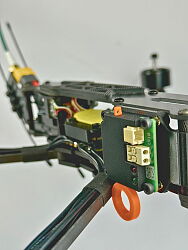
Drone Initiator (Fuse) System
Drone Initiator (Fuse) System
DI (Drone Impact Activation System) is a lightweight, small-sized explosives initiation system designed for attacking drones or smart munitions. It can operate as a main or secondary explosion-initiating system (fuse). The system is equipped with an accelerometer, magnetometer, and has the ability for other sensors to be connected. The DI system supports several initiation modes that can be selected during operation. Product is designed to be easily installable, functional, safe and reliable.
- Capacitors charge logic built in the software
- Internal mechanical switch providing an additional hardware safety layer to complement the software layer (safety pin);
- Optimized accelerometer prevents initiation under aggressive FPV maneuvers
- Protection from high-power radio interferences
- Duplicated ED connector for enhanced protection against static discharge
- Mechanical safety pin – arming is possible only after removal, eliminating the risk of accidental initiation
- Arming delay safety time (user-programmable, default 2 min). After the removal of the safety pin, the timer starts to allow the drone to fly away a safe distance from the command point
- Self-destruct capability according to set time or battery level (default 20 min; this feature can be disabled)
CONTROL SIGNALS
- Servo PWM variant
- Crossfire variant
INITIATION
- Up to140 mJ Electric Detonator (ED) initiation charge
- Up to 16V Integrated electric charge voltage
- Up to 10A initiation current (depends on ED resistance)
ELECTRICAL
- Power input voltage: 30 V
- Power consumption at idle: 9mA (depends on DE resistor, minimum 4V)
- Power consumption peak load: 120mA (depends on DE resistor, minimum 4V)
- Power Output: 3,3 V, 50 mA
MECHANICAL
- External measurements – 36,2 x 40 x 9.6 mm.
- Weight 13g; 15g with safety pin
- Housing: Nylon PA12 with open PCB (coated) soldering points
- Operating temperature -41°C to +71°C
- Arming delay safety time (user-programmable, default 2 min). After the removal of the safety pin, the timer starts to allow the drone to fly away a safe distance from the command point
- Self-destruct capability according to set time or battery level (default 20 min; this feature can be disabled)
CONTROL SIGNALS
- Servo PWM variant
- Crossfire variant
INITIATION
- Up to140 mJ Electric Detonator (ED) initiation charge
- Up to 16V Integrated electric charge voltage
- Up to 10A initiation current (depends on ED resistance)
ELECTRICAL
- Power input voltage: 30 V
- Power consumption at idle: 9mA (depends on DE resistor, minimum 4V)
- Power consumption peak load: 120mA (depends on DE resistor, minimum 4V)
- Power Output: 3,3 V, 50 mA
MECHANICAL
- External measurements – 36,2 x 40 x 9.6 mm.
- Weight 13g; 15g with safety pin
- Housing: Nylon PA12 with open PCB (coated) soldering points
- Operating temperature -41°C to +71°C


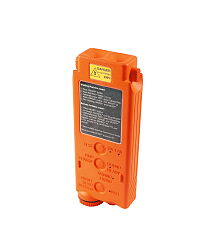
E-RAS System (engineering)
E-RAS System (engineering)
E-RAS (Engineering Remote Activation System) is an explosives initiation system for civil engineering, military, and EOD applications.
It is meant to be used with Mitekas TT3 series transmitter or as a standalone blasting machine in a blaster mode for secure remote activation of a big network of various explosive devices using a digitally encoded radio signal (AES-256 encrypted).
The E-RAS is designed to be as easy and safe to use, and at the same time provide possibilities to prepare it for a wide variety of detonation scenarios.
Key Facts
- High energy, 17.6J / 400V / 25A initiation;
- Low Weight – 280g without batteries (Li-ion 2 x 18650);
- Can be used as:
1) As a radio initiator (direct sight distance 10km);
2) Blasting machine mode;
It has a separate TEST button for convenient detonator wire checks;
Available colors: black, orange, military green on request.
INITIATION
- Up to 17.6J Electric Detonator (ED) initiation charge
- Up to 400V Integrated electric charge voltage
- Up to 25A discharge current
CONNECTIVITY
- Typical communication distance between transmitter and receiver (868 MHz, standard internal antenna, no interference or jamming):
- Maximum number of supported E-RAS – 12 devices with a T-RAS transmitter
- Frequency range: 358MHz-955MHz (excluding 575MHz-583MHz and 717MHz-778 MHz ranges)
- Internal antenna usage frequency range: 830 MHz – 870 MHz
- In standby mode, transmitters and receivers do not emit any signals
- Safe, encrypted (AES-256) bidirectional digital communication and firmware
SAFETY GUIDELINES
- The E-RAS has a separate “TEST” button and LED (green/red), which shows if the detonator is connected properly to avoid a misfire event
- System shows when it is in “Safe” mode and when in “Armed” mode
- To execute initiation (“Fire” mode), it is always mandatory to use a two-finger combination for safety
- Up to 17.6J Electric Detonator (ED) initiation charge
- Up to 400V Integrated electric charge voltage
- Up to 25A discharge current
CONNECTIVITY
- Typical communication distance between transmitter and receiver (868 MHz, standard internal antenna, no interference or jamming):
- Maximum number of supported E-RAS – 12 devices with a T-RAS transmitter
- Frequency range: 358MHz-955MHz (excluding 575MHz-583MHz and 717MHz-778 MHz ranges)
- Internal antenna usage frequency range: 830 MHz – 870 MHz
- In standby mode, transmitters and receivers do not emit any signals
- Safe, encrypted (AES-256) bidirectional digital communication and firmware
SAFETY GUIDELINES
- The E-RAS has a separate “TEST” button and LED (green/red), which shows if the detonator is connected properly to avoid a misfire event
- System shows when it is in “Safe” mode and when in “Armed” mode
- To execute initiation (“Fire” mode), it is always mandatory to use a two-finger combination for safety


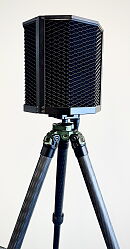
MANTIS - acoustic C-UAV
MANTIS - acoustic C-UAV
MANTIS: Redefining Acoustic Intelligence for Modern Defense
In an era when traditional detection methods fall short, MITEKAS is developing MANTIS—the next-generation acoustic locator technology designed to secure the skies and the battlefield. While current systems struggle with fiber-optic drones and high-noise environments, MANTIS is being engineered to bridge these critical security gaps.
• Precision Localization: We are aiming for near-instantaneous (est. <1 second) and highly accurate direction and location finding for sound-emitting objects.
• Advanced AI Identification: Our development focuses on using AI and mathematical modeling to distinguish between UAVs, transport, and personnel within seconds.
• Intelligent Noise Cancellation: MANTIS is designed to overcome the limitations of existing acoustic solutions by implementing disturbing-sound cancellation for high-pressure, challenging applications.
• Seamless NATO Integration: A core technical goal is full compatibility with NATO communication standards (e.g., SAPIENT), allowing MANTIS to feed critical data directly to cameras, turrets, and battle management systems.
• Versatile User Distribution: We intend for the system to provide rapid, actionable information to everyone from the individual infantryman and vehicle operator to wide-level field commanders.
• Variety of use cases: from one, stand alone device used on the building or other critical infrastructure to squad protection or distributed mesh network for a more robust protection.
• Advanced AI Identification: Our development focuses on using AI and mathematical modeling to distinguish between UAVs, transport, and personnel within seconds.
• Intelligent Noise Cancellation: MANTIS is designed to overcome the limitations of existing acoustic solutions by implementing disturbing-sound cancellation for high-pressure, challenging applications.
• Seamless NATO Integration: A core technical goal is full compatibility with NATO communication standards (e.g., SAPIENT), allowing MANTIS to feed critical data directly to cameras, turrets, and battle management systems.
• Versatile User Distribution: We intend for the system to provide rapid, actionable information to everyone from the individual infantryman and vehicle operator to wide-level field commanders.
• Variety of use cases: from one, stand alone device used on the building or other critical infrastructure to squad protection or distributed mesh network for a more robust protection.

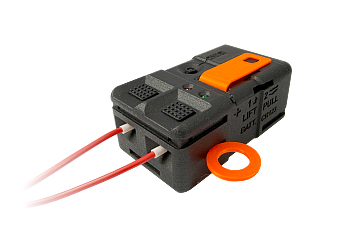
M-RAS 2
M-RAS 2
M-RAS 2 (Micro Remote Activation System) is a light small-sized explosives initiation system dedicated to breaching, mining or demining applications, secondary explosion initiating or similar systems where size and weight are very important. It is meant for secure remote activation of various incendiary and explosive devices using a digitally encoded radio signal. It is used in combination with a T-RAS family Transmitter device. A maximum of 12 units of M-RAS can be bound to one T-RAS Transmitter.
- Encrypted AES-256 signal
- Direct sight 7000m
- City conditions up to 650m
- Maximum 12 units per one T-RAS Transmitter
- Can be used on drones as an initiator or signal repeater
- TIMER function – auto-initiation
- Up to 62 hours in active standby
Key Advantages
- Secure transmission – AES-256 encrypted signal between T-RAS and M-RAS-2 ensures controlled detonation only by authorized users
- Operator-first safety – Built with strict protocols to minimize accidental detonation risk in volatile environments
- Disposable or reusable – While M-RAS-2 is designed as a disposable unit for single-mission efficiency, operators can optionally connect wires to the detonator if they wish to preserve and reuse the device
- Glove-friendly operation – Equipped with two dedicated press buttons for quick and convenient wire connection, even while wearing gloves or operating in cold weather conditions with limited dexterity
- Precision activation – Ideal for synchronized tactical breaching where timing and coordination are critical
INITIATION
Up to 140mJ Electric Detonator initiation charge
Up to 16V integrated electric charge voltage
Up to 10A discharge current, depending on ED resistance
SAFETY GUIDELINES
System shows if the detonator is connected properly to avoid a misfire event
System shows the radio signal level strength
System shows when it is in “Safe” mode and when in “Armed” mode
To execute initiation, two-finger combination
- Secure transmission – AES-256 encrypted signal between T-RAS and M-RAS-2 ensures controlled detonation only by authorized users
- Operator-first safety – Built with strict protocols to minimize accidental detonation risk in volatile environments
- Disposable or reusable – While M-RAS-2 is designed as a disposable unit for single-mission efficiency, operators can optionally connect wires to the detonator if they wish to preserve and reuse the device
- Glove-friendly operation – Equipped with two dedicated press buttons for quick and convenient wire connection, even while wearing gloves or operating in cold weather conditions with limited dexterity
- Precision activation – Ideal for synchronized tactical breaching where timing and coordination are critical
INITIATION
Up to 140mJ Electric Detonator initiation charge
Up to 16V integrated electric charge voltage
Up to 10A discharge current, depending on ED resistance
SAFETY GUIDELINES
System shows if the detonator is connected properly to avoid a misfire event
System shows the radio signal level strength
System shows when it is in “Safe” mode and when in “Armed” mode
To execute initiation, two-finger combination


T-RAS (Remote initiation of explosives)
T-RAS (Remote initiation of explosives)
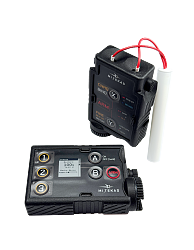
The Tactical Remote Activation System (T-RAS) by Mitekas is an advanced, encrypted system engineered to reliably initiate explosives (80V, 10A) in complex operational environments. Designed with direct input from EOD, military and special operations end-users. A shock-tube adapter (2 or 3 mm) is also available!
AES-256 communication (10km direct-sight operational distance), ultra-fast reaction (100 ms), and flexible multi-receiver deployment to support complex mission scenarios.
With AES-256 encrypted digital radio links, T-RAS ensures uncompromised operational security and resilience against interception, signal manipulation, and EW threats. The T-RAS system supports up to 12 Receivers. In stand-by mode, no radio signals are emitted.
External antenna is optional – it can be conveniently removed, and internal antenna for use in 868 MHz frequency is sufficient.
T-RAS Key Parameters
➢ A shock-tube adapter (2mm, 3 mm) available
➢ 100 ms reaction time —3–10×faster than LoRa-based communication systems
➢ Up to 6,4J Electric Detonator (ED) initiation charge(80V, 10A)
➢ AES-256 encrypted communication for maximum operational security
➢ Up to 12 Receivers per one Transmitter
➢ Five mainmodes of operation:
1) Single Receiver initiation
2) Group of 4 Receivers initiation (total 3 groups)
3) Pre-set delayed initiation (TIMER mode set by the operator)
4) Blasting machine mode for 10 detonators in series or parallel
5) Receivers can also act as signal repeaters
➢ Automatic radio spectrum scanning to detect jamming
➢ Compact, MOLLE-compatible design
➢ Internal antenna for low-profile carriage and deployment (868 MHz)
➢ Selectable frequency range: 358–955 MHz using external antennas
➢ Possibility to operate using two frequencies at once
➢ Replaceable Li-ion 18650 batteries or easy charging via USB-C with a standard cable
➢ Operating temperature -40°C to +71°C (according to STANAG 4866 AECTP-230)
➢ MIL-STD 810H and IP65 tested
➢ All critical components compliant with NATO supply chain requirements
➢ A shock-tube adapter (2mm, 3 mm) available
➢ 100 ms reaction time —3–10×faster than LoRa-based communication systems
➢ Up to 6,4J Electric Detonator (ED) initiation charge(80V, 10A)
➢ AES-256 encrypted communication for maximum operational security
➢ Up to 12 Receivers per one Transmitter
➢ Five mainmodes of operation:
1) Single Receiver initiation
2) Group of 4 Receivers initiation (total 3 groups)
3) Pre-set delayed initiation (TIMER mode set by the operator)
4) Blasting machine mode for 10 detonators in series or parallel
5) Receivers can also act as signal repeaters
➢ Automatic radio spectrum scanning to detect jamming
➢ Compact, MOLLE-compatible design
➢ Internal antenna for low-profile carriage and deployment (868 MHz)
➢ Selectable frequency range: 358–955 MHz using external antennas
➢ Possibility to operate using two frequencies at once
➢ Replaceable Li-ion 18650 batteries or easy charging via USB-C with a standard cable
➢ Operating temperature -40°C to +71°C (according to STANAG 4866 AECTP-230)
➢ MIL-STD 810H and IP65 tested
➢ All critical components compliant with NATO supply chain requirements


Business sector
Subassemblies, equipment and systems of people and property protection
Police special equipment
Defence infrastructure equipment
Engineering equipment
Brands
MITEKAS