News
The panel brought together representatives of the aluminium industry, manufacturers and the academic community. The discussion focused on the potential of aluminium in modern window and door manufactu
At TRANSEXPO 2026, the latest buses and transport technologies will once again meet the history of urban transport. Organised by the Polish Chamber of Urban Transport, the 6th Exhibition of Historic Buses will showcase vehicles from different stages in the development of public transport.
This time, the details are already known. Buses from Warsaw, Kraków, Poznań and Rzeszów will come to Kielce. The oldest is 88 years old, while the stories behind some of the vehicles are every bit as fascinating as the vehicles themselves.
1938 Chevrolet – a pre-war gem
One of the exhibition’s most valuable exhibits will be the 1938 Chevrolet EFD 183 FS, one of the oldest historic vehicles in the fleet of Warsaw’s Municipal Bus Company.
Buses of this type first appeared on the streets of Warsaw in the late 1930s. Small and manoeuvrable, they were used, among other things, on the narrow streets of the city centre. Between 1937 and 1939, 60 such vehicles were delivered to Warsaw.
The vehicle on display dates from 1938. Its restoration was made possible by the discovery of a complete pre-war chassis, including the running gear and drivetrain. The bodywork was recreated with careful attention to the historical details of Warsaw’s buses, and the restoration was completed in 2026.
SAN H100B – from bus to garden shelter and back again
One of the most unusual stories belongs to the 1973 SAN H100B. The bus began its service in Toruń, but after being withdrawn from operation in the late 1970s, it was given a completely new lease of life – for many years, it served as a garden shelter. It remained in this role until 2015.
In 2024, it was acquired by MPK Kraków, where it underwent restoration. Its original appearance and fittings were recreated and the vehicle was returned to full working order. Today, it is one of the few surviving examples of the urban version of the SAN H100.
The Scania that became a mobile cinema
Also making its way to Kielce will be a 1978 Scania CR111M. The bus operated in Sweden for many years before, following the end of its regular service, being acquired by a private owner who used it as… a mobile cinema.
The vehicle was later looked after by a Swedish association of historic motoring enthusiasts before being transferred to MPK Kraków.
Jelcz M11 – a familiar sight on Polish streets
Another exhibit will be the 1988 Jelcz M11. The model combined a Polish-built Jelcz body with the chassis of the Hungarian Ikarus 260 and for many years was a familiar sight in cities across Poland.
The bus on display arrived in Poznań in 1988 and carried MPK passengers until 2001. After spending several years outside the city, it was bought back by MPK Poznań and thoroughly restored. Its historic appearance, fittings and livery were recreated, and in August 2025 the vehicle returned to the streets of Poznań.
Jelcz PR110U – an important part of Rzeszów’s history
The exhibition will also feature the 1982 Jelcz PR110U #442. The model has a particular place in Rzeszów’s history – more than 200 such buses operated across the city and surrounding area over several decades.
Vehicle number 442 was delivered new to MPK Rzeszów in 1982. Its excellent technical condition played a major role in ensuring its preservation as a historic vehicle. Its restoration involved employees who knew the model from its days in regular service, allowing particular attention to be paid to preserving its original solutions and details.
Ikarus 411 – a bus ahead of its time
The historic exhibition will showcase more than just classic designs. The Ikarus 411 from the 1990s will recall the moment when urban transport began entering the low-floor era.
It was one of the pioneering fully low-floor designs, with a consistent floor level throughout the vehicle. In 1995, the first two examples were delivered to Warsaw’s MZA. Only seven buses of this series were ever built, making it an exceptionally rare reminder of the technological breakthrough of the 1990s.
And, of course, the iconic ‘Cucumber’
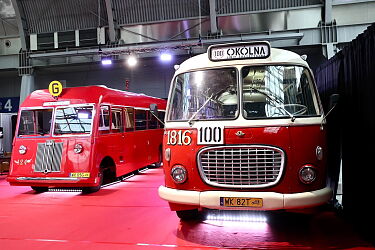
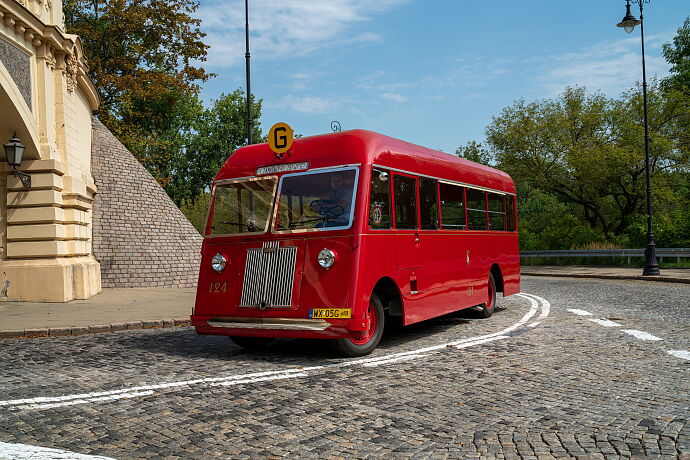
A 1972 Jelcz MEX 272, the legendary red ‘Cucumber’, has also been prepared as a reserve vehicle. It is one of the most recognisable buses in the history of Polish urban transport.
After being withdrawn from regular passenger service, the vehicle on display was used as a technical vehicle for maintaining Warsaw’s tram infrastructure. Following a two-year restoration, it joined the fleet of historic vehicles operated by Warsaw Tourist Lines in 2025.
The 6th Exhibition of Historic Buses will offer a unique opportunity to trace several decades of urban transport development in one place – from the pre-war Chevrolet, through designs still fondly remembered from Polish streets, to the first low-floor buses that were ahead of their time.
Organised by the Polish Chamber of Urban Transport, the exhibition will be part of TRANSEXPO 2026, taking place 14–16 October at Expo Kielce.
(ŁK)


Jelcz PR110U – ważny kawałek historii Rzeszowa
Na wystawie znajdzie się także Jelcz PR110U #442 z 1982 roku. Ten model ma szczególne znaczenie dla Rzeszowa – przez dziesięciolecia po mieście i okolicach kursowało ponad 200 takich autobusów.
Egzemplarz o numerze 442 trafił jako nowy pojazd do MPK Rzeszów w 1982 roku. Do zachowania go jako zabytku przyczynił się bardzo dobry stan techniczny. W jego odbudowie uczestniczyli pracownicy doskonale znający ten model z czasów regularnej eksploatacji, dzięki czemu szczególną uwagę zwrócono na zachowanie oryginalnych rozwiązań i detali.
Ikarus 411 – autobus, który wyprzedzał swoją epokę
Historyczna wystawa pokaże nie tylko klasyczne konstrukcje. Ikarus 411 z lat 90. przypomni moment, gdy komunikacja miejska zaczynała wchodzić w erę niskiej podłogi.
Była to jedna z pionierskich konstrukcji w pełni niskopodłogowych, z jednakowym poziomem podłogi na całej długości autobusu. W 1995 roku dwa pierwsze egzemplarze trafiły do MZA Warszawa. Łącznie powstało zaledwie siedem autobusów tej serii, dlatego dziś jest to wyjątkowo rzadki świadek technologicznego przełomu lat 90.
A na dokładkę kultowy „ogórek”
Jako autobus rezerwowy przygotowany został również Jelcz MEX 272 z 1972 roku, czyli legendarny czerwony „ogórek” – jeden z najbardziej rozpoznawalnych autobusów w historii polskiej komunikacji miejskiej.
Po zakończeniu regularnej służby prezentowany egzemplarz pracował jako pojazd techniczny przy utrzymaniu infrastruktury tramwajowej w Warszawie. Po dwuletniej odbudowie w 2025 roku dołączył do floty zabytkowych pojazdów Warszawskich Linii Turystycznych.
VI Wystawa Zabytkowych Autobusów będzie okazją, by w jednym miejscu prześledzić kilka dekad rozwoju komunikacji miejskiej – od przedwojennego Chevroleta, przez konstrukcje doskonale pamiętane z polskich ulic, aż po pierwsze niskopodłogowe autobusy wyprzedzające swoją epokę.
Wystawa organizowana przez Izbę Gospodarczą Komunikacji Miejskiej będzie częścią targów TRANSEXPO 2026, które odbędą się 14–16 października w Targach Kielce.
(ŁK)
Recommended articles