News
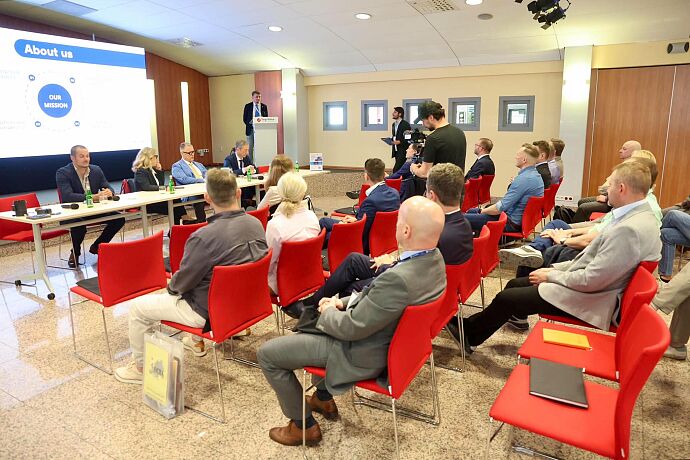
Europe Still Holds Strong Cards in the Automotive Industry. Italians Showcase Competitive Advantages at PLASTPOL
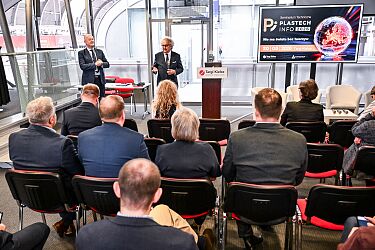
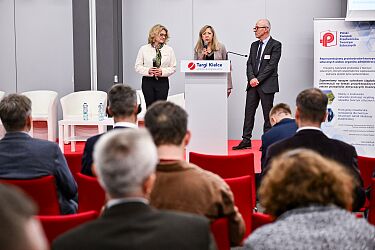
The meeting was organised jointly by Targi Kielce and Confindustria Polonia – the Association of Italian Entrepreneurs in Poland, to present Italian technologies for the automotive sector, foster business relations, and create a platform for discussions on cooperation between Polish and Italian companies.
PLASTPOL-accompanying event had huge significance. As Marco Fontana from Targi Kielce, co-organiser of the meeting, emphasised, the Italian conference was the first version of a format that can be developed during subsequent trade fair unveilings.
Italians were the first to have the courage to introduce this format at PLASTPOL; we want to give national industry representatives the space to showcase their technologies and solutions in the Polish market. We believe that other countries will follow this example, Marco Fontana emphasised.
The conference was opened by Christian Regano, General Manager of Confindustria Polonia. Next, Alessandro Saglio, vice-president of Confindustria Polonia, took the floor and highlighted the organisation's role in developing economic relations between the two countries.
— We want to build bridges between companies, sectors, people and the Italian and Polish markets. Today's event demonstrates the potential for cooperation between Poland and Italy in plastics, polymers, and advanced materials, said Alessandro Saglio.
There are specific facts and figures which support this cooperation. Christian Regano recalled that trade between Poland and Italy reached approximately 35 billion euros, representing an increase of 75 per cent compared to 2020. In Poland, there are approximately 3,000 Italian companies, employing over 100,000 people.
From the perspective of the Italian Trade Agency, Poland remains one of the important European centres of automotive production. Roberto Cafiero, director of the agency in Warsaw, pointed out that the technologies presented by Italian companies address the needs of modern industry: efficiency, quality, innovation, flexibility, and sustainable development.
In the expert section, Italian companies specialising in polymer materials and technologies presented their proposals for the automotive industry.
The LATI brand was represented by Gabriele Lamperti, who presented advanced thermoplastic compounds for the automotive sector, including solutions for combustion and electric vehicles, materials for self-lubricating elements, and applications that enable the replacement of metal with plastics.
Luca Ferrari from COSSA POLIMERI discussed post-production and post-consumer recycled materials, as well as certified solutions from the ESTAGREEN line, which address the needs of companies seeking more sustainable technologies.
Carola Cappellini from FRILVAM presented colour concentrates and additives used in interior and exterior car parts, including bacteriostatic solutions, UV stabilisers, and flame-retardant additives.
Giuseppe Comi from OMS Besser Group presented the experience of a manufacturer operating in the field of thermoplastic compounds, with particular emphasis on the automation of production processes and the development of modern manufacturing systems.
Practicality was the common denominator of the presentations - specific applications, quality certificates, environmental solutions and experience in cooperation with the automotive industry.
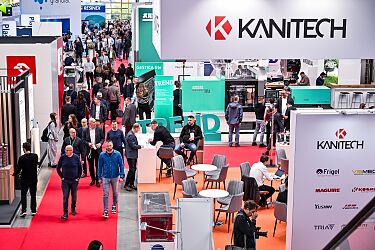
The Italian premiere clearly showed the direction in which PLASTPOL can develop: in addition to the presentation of technologies, machines and materials, discussions about international cooperation, supply chains and specific partnerships are becoming increasingly important. If further delegations follow the Italians’ example, the Kielce trade fair may become an even stronger meeting point for the European plastics industry.


(BB)
Recommended articles