News
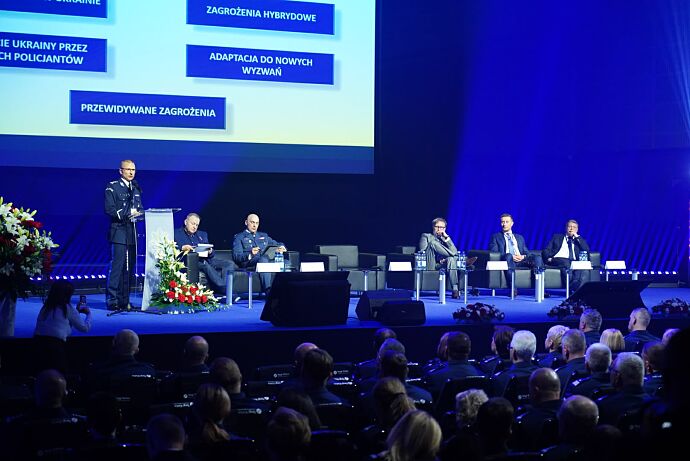
Safety and security in times of change were discussed at the Polsecure trade fair. Experts discussed new threats and the role of the police
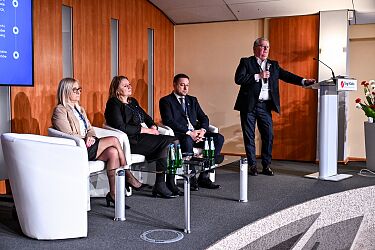
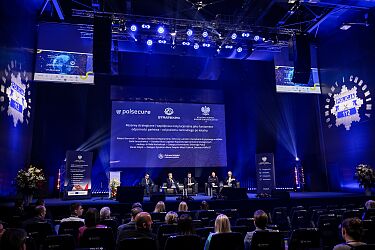
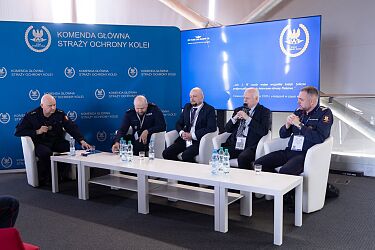
The discussion featured:
- Dr Michał Gabriel Węglowski – prosecutor of the Regional Prosecutor’s Office in Gdańsk, member of the Commission for the Codification of the System, Judiciary and Prosecution,
- Retired Colonel Adam Jawor – former Europol expert on eastern criminal groups, editor of Infosecurity24,
- Major PhD. Tomasz Goryca – Director of the 8th Board of the State Protection Service,
- Krzysztof Dąbrowski – Managing Director of the Security Division at the Polish Financial Supervision Authority,
- Retired Brigadier General Dr Hab. Jan Rajchel – President of the Government Agency for Strategic Reserves
The discussion was moderated by Inspector Dr Michał Białęcki, director of the Criminal Bureau of the Police Headquarters.
Security - a shared responsibility
The introduction to the debate emphasised that the internal security of the state remains one of the key challenges of modern times, especially amid globalisation and rapid technological change. The Police – as the largest uniformed service – still constitutes the foundation of the security system, but its effectiveness increasingly depends on cooperation with other services, institutions and international partners.
Experts agreed that contemporary threats are multidimensional and cross-border in nature, which requires a new approach to their identification and combat.
The new face of crime
One of the main topics was the evolution of crime, which is increasingly taking a hybrid form - the most important threats include:
- digital crime and cyberattacks on critical infrastructure,
- disinformation and activities in the information space (including deepfakes, troll farms),
- sabotage and diversion,
- incidents involving the use of drones and new technologies,
- migratory pressure and its consequences for security.
It was emphasised that technological developments and global geopolitical tensions significantly increase the complexity of threats.
Impact of the war in Ukraine
An important part of the discussion was the analysis of the effects of the war in Ukraine on Poland's security - the experts highlighted the scale of migration and the related organisational and social challenges, new operational experience gained by Polish services, including securing evidence in war zones, and the need to prepare for the long-term consequences of the conflict, including increased crime and hybrid threats.
It was noted that the experience gained in Ukraine has already been applied in activities carried out in Poland.
Adaptation of services to new challenges
During the panel, much attention was devoted to changes in the structures and operation of the police - the most important directions include:
- development of units dealing with digital crime,
- strengthening the ability to counteract acts of terrorism and sabotage,
- integration of activities of various services and units,
- moving from a reactive model to preventive and analytical actions.
Experts emphasised that the future of security is based on rapid response, but above all on the ability to predict threats.
Challenges of the future
The discussion clearly showed that the security system is currently facing a number of new challenges, the scale of which will continue to grow - the most important include:
- further development of technological crime,
- the growing importance of hybrid threats,
- the need to protect critical infrastructure,
- the growing role of information and combat in the digital space.
Experts pointed out that the answer to these challenges must be a flexible, modern security system based on cooperation, knowledge and technology. They emphasised that the continuous improvement of officers’ competencies is and will be crucial.


/MŚ/
Recommended articles