News

Grain-free, chicken-free, packed with meat. Do we really know how to read a pet food label?
Same recipe, two very different readings
‘Grain-free’, ‘chicken-free’, ‘single-protein’, ‘rich in fresh meat’: claims like these are turning up on more and more packs of dog and cat food. For pet owners, they can be a powerful reason to buy. But do they actually tell you anything about a product’s nutritional value?
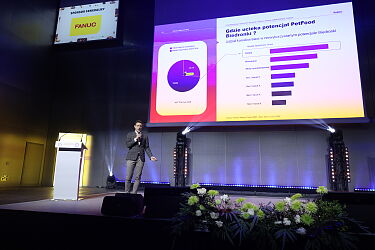
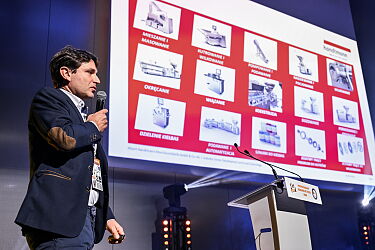
The speech was devoted to this issue “Same formulation, two looks. That was the question at the heart of ‘Same Recipe, Two Perspectives: How Is Pet Food Judged by a Nutritionist and by Today’s Consumer?’, a talk given at the 2nd Professional Pet Food Congress by Dr Anna Budny-Walczak of the Wrocław University of Environmental and Life Sciences, who also represents A-Psisko, a practice offering dog-assisted therapy and dietary therapy for dogs and cats.
She set two ways of reading a label side by side. Consumers tend to go by lists of ‘good’ and ‘bad’ ingredients, by popular feeding trends, and by what other owners and online influencers say. A nutritionist, by contrast, looks at where the nutrients come from and how good they are, how well the recipe is balanced, how digestible it is, how it was made, and what the individual animal actually needs.
The crucial difference is that the specialist judges the recipe as a whole, not a single ingredient or a slogan on the pack.
Fresh meat or meat meal? It’s the nutrition that counts
One of the examples in the presentation compared fresh meat with meat meal.
Many consumers assume that the more fresh meat a food contains, the better it must be. From a nutritionist’s point of view, things are rather more complicated.
What matters is not just how much of an ingredient there is and what it is called, but also its quality, amino acid profile, digestibility and processing, and how much it really contributes to the nutrients in the finished food.
The same goes for protein sources. Naming a particular kind of meat says little, on its own, about a product’s nutritional value. What counts is whether it supplies the right amino acids and whether the recipe as a whole meets the animal’s needs.
Grain-free does not always mean better
The talk then turned to the popularity of foods labelled ‘grain-free’.
Some consumers see grains as cheap fillers and take their absence as a sign of higher quality. Yet, as the talk made clear, what really matters is the job each ingredient does in the recipe.
A nutritionist will look, among other things, at the sources of starch, the role it plays in both processing and nutrition, and whether the finished food is complete and properly balanced.
Vegetables and other plant ingredients should be judged in the same way. They can provide fibre, starch and other substances, but the type of vegetable used does not in itself determine the quality of the product.
Chicken-free, single-protein, low-phosphorus: what do these claims really mean?
Much of the talk was also given over to claims that consumers associate with safe feeding and preventive health care.
‘Chicken-free’: the owner of a dog with a suspected allergy may decide that every poultry-derived ingredient has to go. However, Dr Budny-Walczak pointed out that a food allergy is a reaction to specific proteins. What matters, therefore, are the actual protein sources, how the raw materials are purified, and whether traces of protein may remain.
‘Low phosphorus’: less of this mineral does not automatically make for a better food. How much phosphorus an animal needs depends on its health and on its diet as a whole. For a healthy dog, there is no reason to push phosphorus levels as low as possible without a specific need. It is a different story with therapeutic diets for animals with kidney disease, where controlling phosphorus intake can be important.
‘Single-protein’: a food based on one protein source can be useful in certain situations, such as when a food allergy is being diagnosed. That does not mean, however, that it will always be safer than other products. What matters is the actual composition, the risk of cross-contamination, and whether the animal has been exposed to that protein before.
What does the analytical breakdown tell us?
The talk also covered the ‘analytical constituents’ on the label, which include protein, fat, crude fibre, ash and moisture content.
Dr Budny-Walczak stressed that these figures need to be read together, alongside the food’s energy value and intended use.
She paid particular attention to crude ash, which consumers sometimes treat as a sign of a poor-quality product. In fact, this figure simply reflects the mineral content and should be considered in the context of the recipe as a whole.
The same applies to functional additives and preservatives. When assessing them, what matters is why they are used, in what quantities, how safe they are, and how they affect the food’s shelf life and quality.
Manufacturers should explain, not just make claims
An important part of the presentation was a set of conclusions aimed at pet food manufacturers.
In her view, product communication should rest on sound data and on explaining the real nutritional value of a recipe, rather than on eye-catching marketing claims alone.
Her recommendations included educating consumers, explaining the technologies used, presenting data to back up product claims, and gaining a better understanding of why pet owners buy what they buy.
It is especially important to be precise about where ingredients come from, what properties are claimed for the food, and which animals it is intended for.
Where science meets business
Dr Engineer Budny-Walczak’s talk showed that today’s pet food market faces a twofold challenge: developing new recipes, and communicating their properties responsibly.
With consumers becoming better informed and certain feeding trends gaining ground, manufacturers need to think ever more carefully about how they present the composition and value of their products.
The key takeaway? Good pet food is not a collection of fashionable ingredients and catchy claims, but a recipe tailored to the animal’s nutritional needs, whose quality can be judged on the basis of reliable data.
The talk was part of the 2nd Professional Pet Food Congress, held alongside the Future Pet Food 2026 trade fair at the Expo Kielce Congress Centre on 22–23 October.
Recommended articles