News
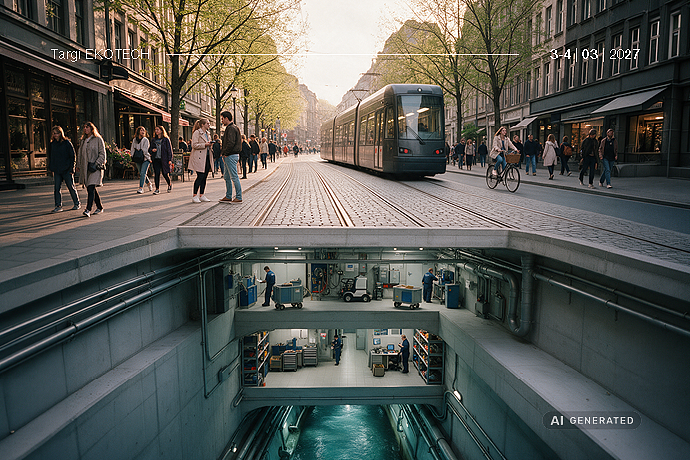
Your city recovers more from its waste than you might think
The black bin: convenience comes at a cost
General waste is temptingly simple. There’s no need to wonder whether packaging belongs in the yellow, blue or green bin. We chuck it all in together and shut the lid.
But the problem doesn’t go away. Mixed household waste also goes to a treatment plant for processing. Using screens, separators, magnets, and other equipment, some metals, plastics, and other usable fractions can be separated.
However, there’s a crucial difference. A PET bottle put in the yellow bin makes far better recycling material than the same bottle mixed up with leftover dinner, soggy paper, and everything else from the kitchen bin. Whatever we don’t separate at home has to be separated later at the plant. And by then, it takes machinery, energy, transport, and manpower.
Convenience only looks free. The bill turns up somewhere else.
And at the end of the day, it’s residents who foot the bill for running the waste management system.
Plastic, glass, paper. What’s in it for us?
Separate collection doesn’t mean the contents of your yellow or blue bin instantly become new products. It’s only the start of the journey.
Plastics are sorted by type, cleaned, and shredded. Some are turned into recycled pellets that can be used to make new products. Not all plastic can be recycled as easily or as often, however, so both the type of plastic and how clean it is make a difference.
Glass packaging can be cleaned, crushed into cullet, and sent back to the glassworks to make new bottles and jars.
Waste paper goes to the paper mill. Once it has been pulped and cleaned, the recovered fiber can be used to make cardboard, cartons, and other paper products.
Metals are particularly rewarding to recycle. Steel can be separated out with magnets, aluminium can be recovered just as effectively, and the reclaimed metal goes back to smelters and manufacturers.
So a can, a bottle or a carton needn’t be the end of the story.
An old phone? It’s a treasure trove of raw materials
A phone that’s been sitting in a drawer for five years looks like a worthless bit of old electronics.
In fact, it contains copper, aluminium and steel, along with small amounts of gold, silver and other precious metals. The same goes for computers, TVs, chargers and household appliances.
At specialist facilities, devices are dismantled and the materials separated and sent on for recovery. At the same time, e-waste can contain hazardous substances that need careful handling, which is why it should never go in your ordinary bins.
An old phone, then, is a bit like a miniature mine of materials we have already dug out of the ground once.
Leaving it in a drawer for years on end keeps all those materials out of circulation.
And that worn-out sofa?
Bulky waste is trickier, because it is usually made of many different materials.
An old sofa contains wood, metal springs and frame parts, foam, fabric and plastic. Once it reaches the right collection system, some of those materials can be separated out and sent for recycling or other forms of recovery.
That doesn’t mean every sofa will be neatly taken apart and recycled down to the last staple. The more complex the item, the harder it is to recover.
But putting it in the right waste stream at least gives the wood, the metal and the rest a chance of not all ending up in the same place.
That’s why bulky waste has its own collections and household waste recycling centres.
Leaves, grass, hay and branches are a resource too
A city’s waste doesn’t just come from people’s homes.
In autumn, council teams collect tonnes of leaves. Throughout the growing season, there are also grass cuttings, hay from green spaces, branches from tree and hedge trimming and other green waste from looking after parks, squares and verges.
All of this can stay in the city’s own loop.
Leaves, grass and plant matter can be composted. The resulting compost can then be used to improve the soil and to care for green spaces.
Branches can be chipped. The chippings can add structure to compost or, suitably prepared, be used to mulch flower beds and the ground beneath shrubs and trees.
Bio-waste can also go to anaerobic digestion plants. There it produces biogas, which can be used to generate energy, and digestate, which can be put to further use.
In a well-designed system, then, a leaf from a city park isn’t something to get rid of. It can go back to the soil it came from.
The sooner we sort, the more we recover
Which brings us back to our own bins.
The cheapest and simplest place to separate materials isn’t a giant sorting plant: it’s at home, in the office or in the restaurant.
Glass goes with glass. Paper with paper. Plastics and metals in the right bin. Food and garden waste is kept apart from dry recyclables. Electronics and bulky items go to their own dedicated collection schemes.
That way, the plants further down the line don’t have to start by fishing valuable materials out of a jumble of everything and anything.
It’s the difference between an economy built on eliminating waste and one that tries to hold on to the value of what we have already made and mined. Fewer wasted resources also means less waste with nowhere left to go but landfill.
Sorting technology, recycling, bio-waste treatment, solutions for municipal waste operators and resource recovery will all be on show at EKOTECH – Circular Economy Trade Fair.
EKOTECH – Circular Economy Trade Fair
Expo Kielce | March 3–4, 2027
(BB)
Recommended articles