News
Technology should make work easier, not add to the workload. IT systems discussed at the Congress of Accounting Firms
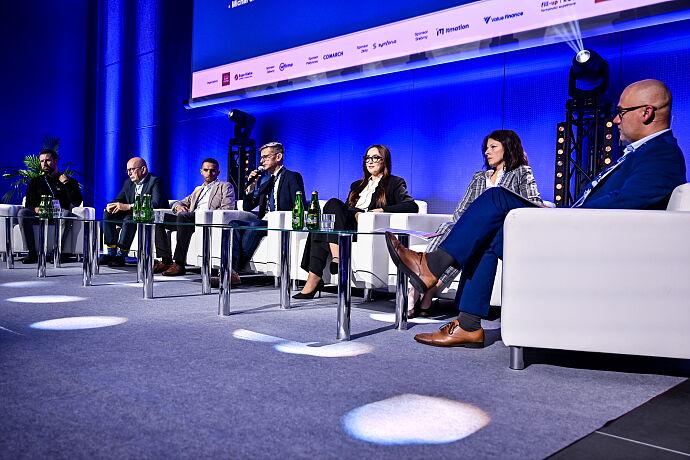
The discussion featured Adam Niewiedzioł, Key Account Specialist at SaldeoSMART; Zuzanna Niełacna, fillup k24 ambassador and founder of TCE law firm; Ewa Szpytko-Waszczyszyn, tax expert and Management Board Member at wFirma; Radosław Lasota, Product Manager for Accounting Firms at Comarch Betterfly; Roman Łożyński, Director of the IT Centre of the Ministry of Finance; and Michał Sieradzan, Product Manager at Symfonia.
A conversation around a specific invoice
One of the issues raised during the panel was communication scattered across email, messaging apps and accounting systems. When a client asks about an invoice on WhatsApp while the relevant explanation is buried in an email, an accounting firm employee first has to piece together the history of the case.
The solutions discussed during the panel enable direct communication around a document. This keeps the client’s question and the firm’s response linked to a specific invoice. The same approach can also be useful for payroll and HR matters, where employees of the client company and those responsible for its administration may both be involved.
Does a small business need a fully-fledged ERP system?
The panellists also discussed how to match a system to the scale of a business. A small company primarily needs to be able to issue an invoice efficiently, receive payment and provide the information needed for accounting purposes. Too many features can make these straightforward tasks more difficult.
– If we offer a very small client a highly complex solution, it certainly will not help them in every respect – in fact, it may get in their way – said Radosław Lasota of Comarch Betterfly. He pointed out that user-friendly, mobile tools make it easier for clients to submit documents and enable accounting firms to process them more quickly.
The discussion included examples of such practical improvements: sending a photo of an invoice, extracting data using OCR, or accessing a document shortly after it has been issued. The panellists also discussed automatic checks of contractor details and bank account numbers, as well as assigning documents to accounting schemes.
Michał Sieradzan of Symfonia stressed that streamlining communication and reducing the number of platforms can save accounting firms the time they currently spend on tasks that support client service rather than the service itself. At the same time, he stressed that artificial intelligence needs to be approached sensibly: ultimately, a human being verifies and signs a declaration or financial statement.
The panel offered a practical takeaway: a system should be judged by whether the client can easily submit a document, the accounting firm employee can quickly find the information they need, and both sides can spend less time on unnecessary tasks. That is when technology genuinely starts to support day-to-day work.


