News
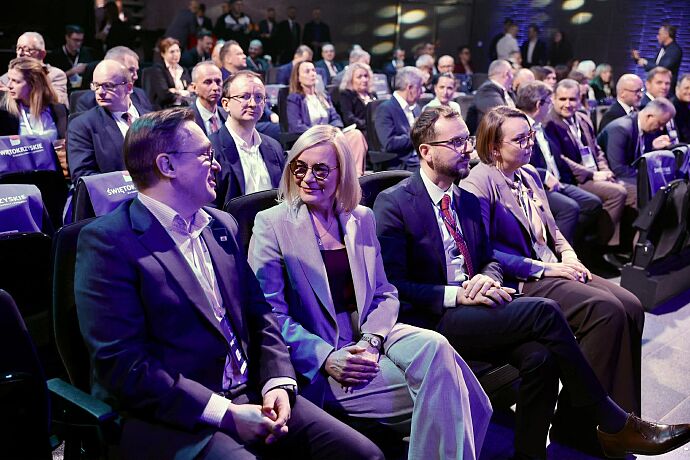
Świętokrzyskie is looking for development impulses - business and local government on investments, energy and cooperation
Support for entrepreneurs, the financial situation of local governments, and the conditions for running a business were the main topics of the Economic Spring. This event accompanied the INDUSTRIAL SPRING trade fair.
The Marshal of the Świętokrzyskie Voivodeship, Renata Janik, pointed out that the region – located between Warsaw and Krakow – is facing a population outflow and competition from larger centres for investment.
– We have been facing demographic problems for years. Large cities attract residents by offering attractive jobs – often those that are lacking in our region and investors are also more likely to choose larger centres. An additional challenge is that some entrepreneurs operating in the voivodeship do not pay taxes in the region, which affects the region's finances, said Renata Janik.
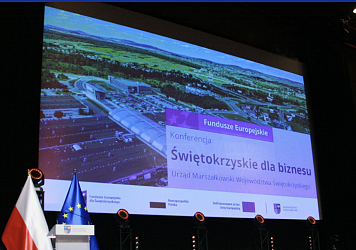
The local government focuses on supporting entrepreneurship, including through EU funds. The key projects include the “Świętokrzyskie for business” programme worth over PLN 34 million and “Intelligent Świętokrzyskie”; approximately EUR 39 million has been allocated for the development of employee competences in the current financial perspective.
At the same time, the region's financial situation remains challenging. Following changes to the subsidy system, the voivodeship's revenues in 2025 fell by approximately PLN 38.5 million year-on-year, which limits investment opportunities, including in infrastructure and healthcare.
The economy is dominated by microenterprises, which account for over 96% of all entities. They are the ones who are most responsible for the labour market in the region.
Event participants emphasised that, in addition to financial support, the regulatory and economic environment is crucial. Michał Wypychewicz, chairman of the supervisory board of ZPUE SA, said that cooperation between business and administration has improved in recent years, thanks in part to deregulation initiatives.
Regarding the management and development of companies, he highlighted the importance of efficient decision-making and an appropriate organisational culture.
– Within the organisation, we need discussions and a clash of arguments. But once the decision is made, the entire team must work as one, which makes companies effective, emphasised Michał Wypychewicz.
In his opinion, stable law, state security, and access to competitively priced energy remain key to enterprise development. Particularly in the energy sector, he noted, a long-term strategy is necessary because a lack of continuity in decisions translates into higher operating costs for companies.
Referring to ZPUE's experience, he pointed out that scaling a business requires consistent action, technological investment, and international expansion. The company is developing energy storage facilities and solutions for electromobility, moving towards a technological model.
The Economic Spring was an opportunity to exchange experiences between entrepreneurs, local government and support institutions. It was pointed out that in an era of growing competition and technological transformation, combining competencies and building lasting relationships between the public sector and business are becoming crucial.


(BB)
Recommended articles